
AI face swap is a technology that replaces one person’s face with another in a photo or video using artificial intelligence. It can create fun edits, movie-style effects, and creative social media content, but it also raises serious concerns around consent, privacy, and deepfake misuse.
This guide explains how face swap AI works, where it is used, which types of tools exist, and how to use the technology responsibly.
What Is AI Face Swap?
AI face swap is a form of image or video editing powered by deep learning. The software identifies a face in one photo or video, then replaces it with a face from another image while trying to match expressions, angle, lighting, and skin tone.
In simple terms, you provide two inputs:
-
A source face you want to use
-
A target photo or video where the face will be replaced
The AI then produces a new image or video with the ai swapped face official website. This process is closely related to deepfake technology, because both use machine learning to create or alter realistic human faces.
How AI Face Swap Works
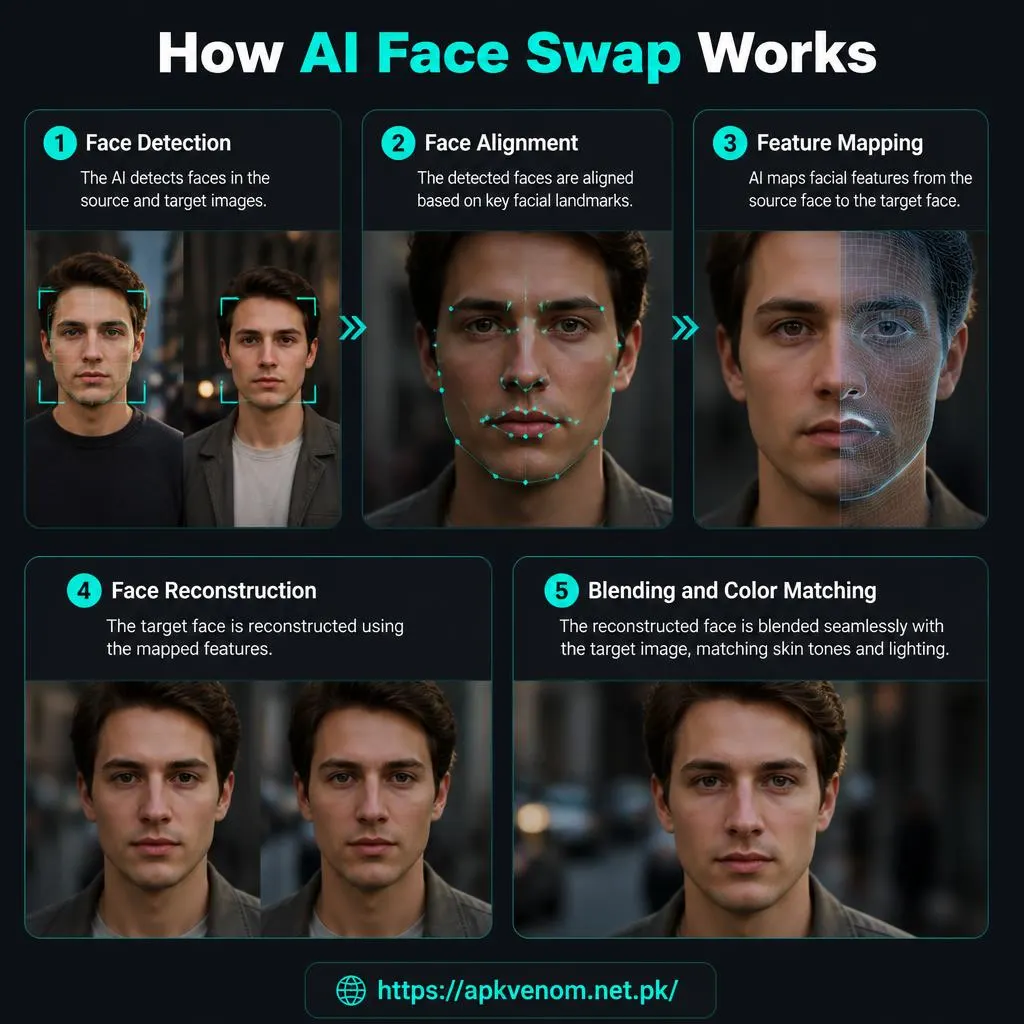
AI face swap tools usually follow several steps. The exact method differs by app, but the basic process is similar.
1. Face Detection
The tool first finds the face in both images or video frames. It looks for facial landmarks such as the eyes, nose, mouth, jawline, and eyebrows.
2. Face Alignment
Next, the AI rotates, scales, and positions the face so it matches the angle and size of the target face. This step is important because a face that is not aligned properly will look unnatural.
3. Feature Mapping
The system maps facial features and expressions. In video face swaps, it tracks mouth movement, blinking, head turns, and facial expressions across frames.
4. Face Reconstruction
The AI rebuilds the replacement face to fit the target image. Older deepfake methods often used autoencoders, while newer systems may use diffusion-based models that handle lighting and angles more smoothly.
5. Blending and Color Matching
Finally, the tool blends the new face into the original image. It adjusts skin tone, shadows, lighting, edges, and sometimes video grain so the result looks more realistic.
Types of AI Face Swap Tools
Photo Face Swap Apps
These tools swap faces in still images. They are commonly used for memes, profile pictures, and simple entertainment edits.
AI Video Face Swap Tools
These tools replace faces in video clips. The AI must track the face across every frame, which requires more processing power and usually produces better results with clear, front-facing footage.
Real-Time Face Swap Apps
Some apps can swap faces during live video calls or streams. They use neural networks to overlay a new face while tracking facial landmarks in real time.
Web-Based Face Swap Tools
Online tools let users upload images or short videos without installing software. They are convenient, but users should check the platform’s privacy policy before uploading personal photos.
Common Uses of Face Swap AI
AI face swap technology has several legitimate uses:
-
Creating funny photos with friends who have given permission
-
Making entertainment or parody content
-
Producing visual effects for short films
-
Testing character concepts in creative projects
-
Creating educational demonstrations about deepfakes
-
Making branded social media content with consented models
The technology can be impressive, but its usefulness depends on how responsibly it is used. Consent and disclosure should come before creativity.
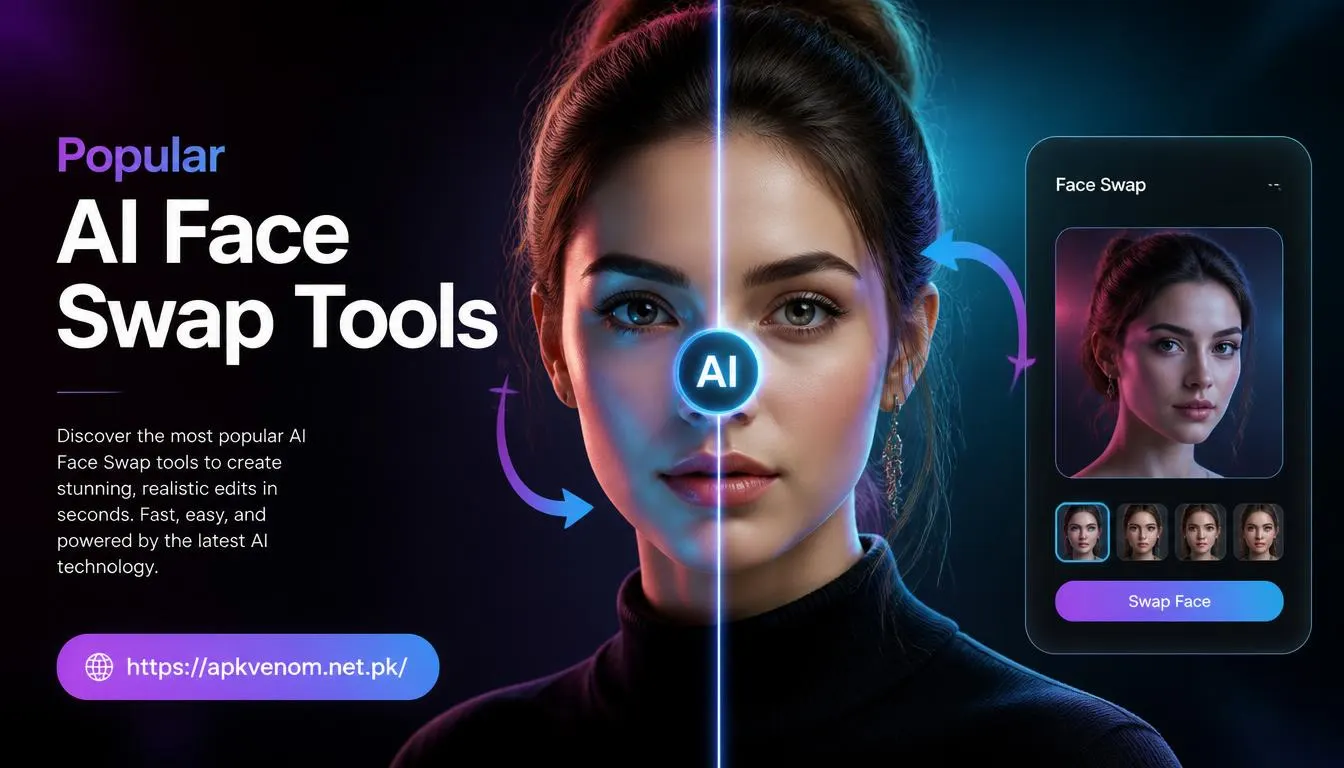
Popular AI Face Swap Tools
There are many face swap apps and websites, but tool quality changes quickly. Before using any platform, check its privacy policy, upload limits, watermark rules, and commercial-use terms.
| Tool Type | Best For | Important Check |
|---|---|---|
| Mobile face swap app | Quick edits and social media | Data storage and watermark policy |
| Web-based face swap tool | No-install editing | Privacy policy and file deletion |
| AI video face swap tool | Short video edits | Processing limits and consent rules |
| Real-time face swap app | Live effects | Security and misuse prevention |
| Professional VFX software | Film and creative work | Licensing and commercial rights |
Avoid tools that promise “no consent needed,” allow non-consensual intimate imagery, or do not explain how they handle uploaded photos. Responsible platforms should include consent reminders, moderation policies, and clear data-handling practices.
Benefits of AI Face Swap Technology
When used ethically, AI face swap can be useful for creators and businesses.
-
It reduces the need for expensive visual-effects work.
-
It helps creators test creative concepts quickly.
-
It can make educational content more engaging.
-
It supports entertainment and parody content with consent.
-
It can demonstrate how deepfake technology works.
However, these benefits do not remove the need for permission, labeling, and careful review.
Risks and Ethical Concerns
Lack of Consent
Using someone’s face without permission can violate privacy rights, publicity rights, or local laws. Consent should be clear, preferably written, especially for commercial use.
Deepfake Misuse
Face swap technology can be used to create misleading videos, impersonate people, harass individuals, or spread false information. These uses can cause real harm and may be illegal in many jurisdictions.
Non-Consensual Intimate Content
Creating sexual or intimate images of a real person without consent is one of the most serious forms of misuse. Never create, share, or upload this type of content.
Privacy Risks
Uploading personal photos to an unknown website can expose sensitive biometric data. Choose trusted services and avoid uploading ID photos, children’s images, or private videos.
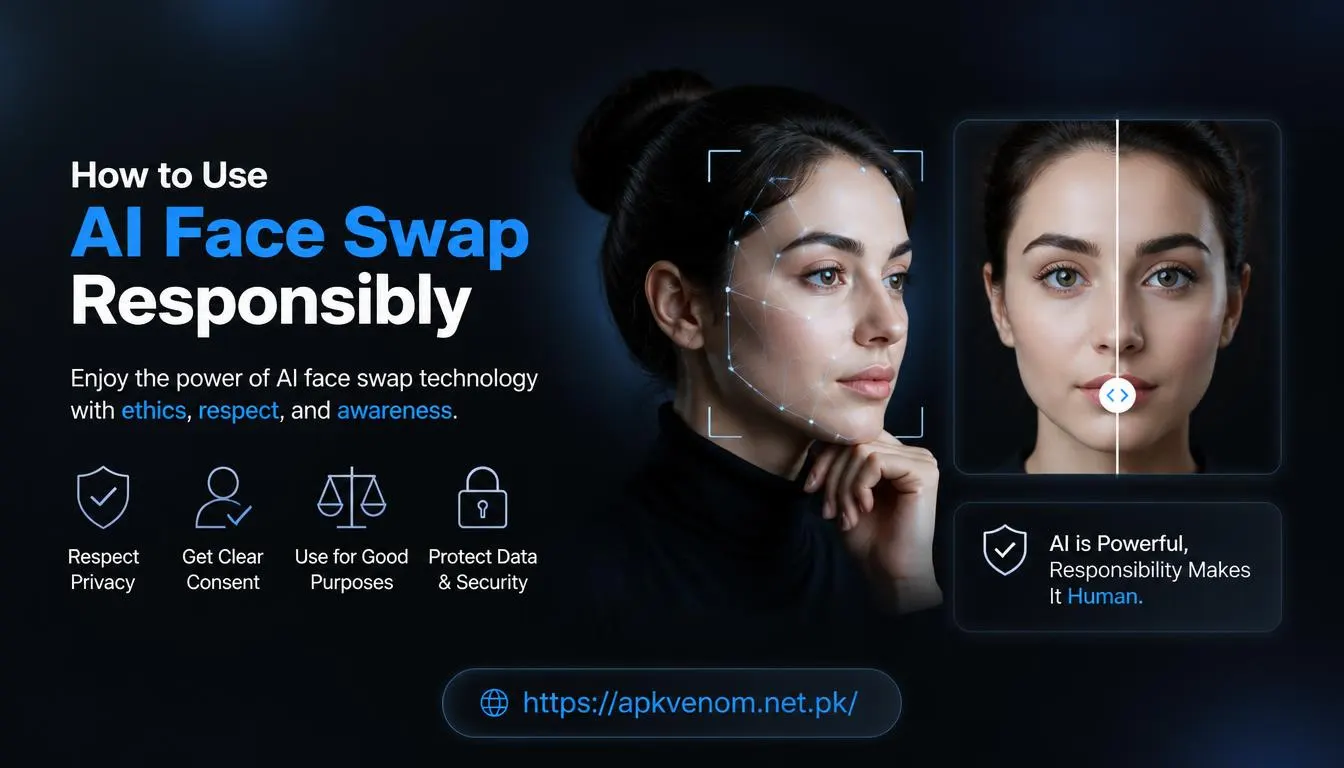
How to Use AI Face Swap Responsibly
Follow these best practices before creating or sharing any face-swapped content:
-
Get clear consent. Ask permission from every person whose face appears in the content.
-
Put consent in writing. For commercial projects, record what the face will be used for and where it will be published.sozee
-
Label AI content. Clearly state that the image or video is AI-generated or edited.
-
Avoid impersonation. Do not use face swap content to pretend to be someone else.
-
Never create harmful content. Do not make sexual, abusive, fraudulent, or misleading material.
-
Use trusted tools. Read the privacy policy and check whether uploaded files are deleted after processing.
-
Keep private data private. Do not upload sensitive documents, children’s photos, or images of people who have not agreed.
-
Review before sharing. Check the final result for mistakes, offensive content, or unintended impersonation.
How to Spot a Face Swap or Deepfake
AI face swaps are becoming more realistic, but they can still show warning signs.
-
Strange skin texture or blurry edges around the face
-
Inconsistent lighting between the face and background
-
Unnatural blinking or mouth movement
-
Poor alignment during head turns
-
Flickering in video frames
-
Odd reflections in glasses or eyes
-
Audio that does not match lip movement
Detection systems also use facial landmarks, temporal artifacts, and machine-learning models to identify manipulated media. For live video calls, asking someone to turn to a side profile or hold an object near their face can sometimes reveal problems with real-time face swapping.
Legal and Safety Checklist
Before using an AI face swap tool, confirm the following:
-
You have permission from every person shown.
-
You are not impersonating anyone.
-
The content is not sexual, abusive, or misleading.
-
You have labeled the content as AI-generated.
-
You understand the tool’s data and privacy policy.
-
You are not violating local deepfake or privacy laws.
-
You have saved consent records for commercial projects.
Rules differ by country and platform, so do not assume that a face swap is legal just because an app allows it.
Final Thoughts
AI face swap technology can be entertaining and useful for creative projects, but it should never be used without consent or clear labeling. The same tools that create funny edits can also be misused for harassment, fraud, and misleading deepfakes.
Use trusted tools, get permission, disclose AI editing, and avoid sensitive uploads. Responsible use protects both the people in the content and the person creating it.